


Can non woven interlining be cut easily?
As a supplier of non woven interlining, I often encounter questions from customers regarding the ease of cutting our products. Non woven interlining is a crucial component in the garment and textile industries, providing support, shape, and stability to various fabrics. The ability to cut it easily is a significant factor for manufacturers and designers, as it can affect the efficiency and quality of the production process.
Understanding Non Woven Interlining
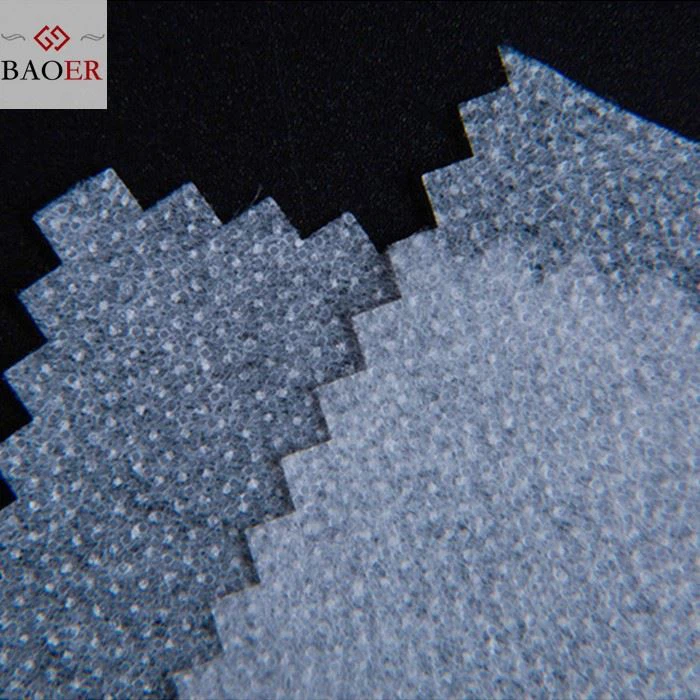
Non woven interlining is made from fibers that are bonded together through mechanical, chemical, or thermal processes, rather than being woven like traditional fabrics. This unique structure gives non woven interlining several advantages, including its lightweight, flexibility, and cost - effectiveness. There are different types of non woven interlining, such as Non Woven Adhesive Interlining, Non Woven Fusible Interlining For Garment, and Tape Non Woven Interlining Fabric. Each type has its own characteristics and applications, which can also influence the cutting process.
Factors Affecting the Ease of Cutting
Fiber Composition
The type of fibers used in non woven interlining plays a vital role in its cuttability. For example, interlinings made from natural fibers like cotton may be easier to cut compared to those made from synthetic fibers such as polyester. Natural fibers are generally softer and more flexible, allowing for cleaner cuts with less fraying. On the other hand, synthetic fibers can be more durable and resistant to heat, but they may require sharper cutting tools to achieve a precise cut.
Bonding Strength
The strength of the bonding between the fibers in non woven interlining also affects how easily it can be cut. A stronger bond can make the interlining more stable and less likely to fray during cutting, but it may also require more force to cut through. Conversely, a weaker bond may result in a more flexible interlining that is easier to cut, but it may also be more prone to damage and fraying.
Thickness and Density
Thicker and denser non woven interlinings are generally more difficult to cut than thinner and less dense ones. Thicker interlinings require more pressure and sharper blades to cut through, and they may also produce more resistance during the cutting process. Additionally, the density of the interlining can affect the smoothness of the cut, as a higher density may cause the blades to become clogged more easily.
Cutting Methods for Non Woven Interlining
Manual Cutting
Manual cutting is a common method for small - scale production or when precise cuts are required. Scissors or rotary cutters are often used for manual cutting. When using scissors, it is important to choose a pair with sharp blades and a comfortable grip. Rotary cutters, on the other hand, can provide a more efficient and precise cut, especially for straight lines. However, both scissors and rotary cutters may require some practice to achieve clean and accurate cuts, especially when dealing with thicker or denser non woven interlinings.
Machine Cutting
For large - scale production, machine cutting is usually the preferred method. There are several types of machines that can be used for cutting non woven interlining, such as die - cutting machines, laser cutting machines, and ultrasonic cutting machines.
- Die - cutting machines: These machines use a die, which is a pre - shaped blade, to cut the interlining into specific shapes. Die - cutting is a fast and efficient method, and it can produce consistent cuts with high precision. However, the cost of creating the dies can be relatively high, especially for complex shapes.
- Laser cutting machines: Laser cutting uses a high - powered laser beam to cut through the interlining. This method offers high precision and can cut intricate shapes with ease. Laser cutting also produces a clean cut with minimal fraying, as the heat from the laser seals the edges of the interlining. However, laser cutting machines can be expensive to purchase and operate, and they may require special safety precautions.
- Ultrasonic cutting machines: Ultrasonic cutting uses high - frequency vibrations to cut through the interlining. This method is suitable for cutting a wide range of materials, including non woven interlining. Ultrasonic cutting produces a clean and smooth cut, and it can also reduce the amount of dust and debris generated during the cutting process.
Tips for Easy Cutting
- Use sharp cutting tools: Whether you are using manual or machine cutting methods, sharp cutting tools are essential for easy and clean cuts. Dull blades can cause fraying, uneven cuts, and may also damage the interlining.
- Choose the right cutting method: Consider the type, thickness, and density of the non woven interlining, as well as the volume of production, when choosing a cutting method. For small - scale production or intricate cuts, manual or laser cutting may be more suitable, while for large - scale production, die - cutting or ultrasonic cutting may be more efficient.
- Prepare the interlining: Before cutting, make sure the non woven interlining is flat and free of wrinkles or folds. You can use a pressing iron to smooth out the interlining if necessary. This will help ensure a more accurate and consistent cut.
Conclusion
In general, non woven interlining can be cut easily if the right cutting methods and tools are used, and the factors affecting cuttability are taken into consideration. As a non woven interlining supplier, we are committed to providing high - quality products that are easy to work with. Our Non Woven Adhesive Interlining, Non Woven Fusible Interlining For Garment, and Tape Non Woven Interlining Fabric are designed to meet the diverse needs of our customers in the garment and textile industries.
If you are interested in our non woven interlining products or have any questions about cutting them, please feel free to contact us to discuss your specific requirements and start a procurement negotiation. We look forward to working with you to achieve the best results in your production process.

References
- Textile Manufacturing Handbook: A Guide to the Production of Yarns, Fabrics, and Apparel.
- Nonwovens: An Engineering Approach.
