


Hey there! As an interlining supplier, I often get asked a bunch of questions about our products. One question that pops up quite a bit is, "Is interlining water - resistant?" Let's dive right into this topic and find out the answers.
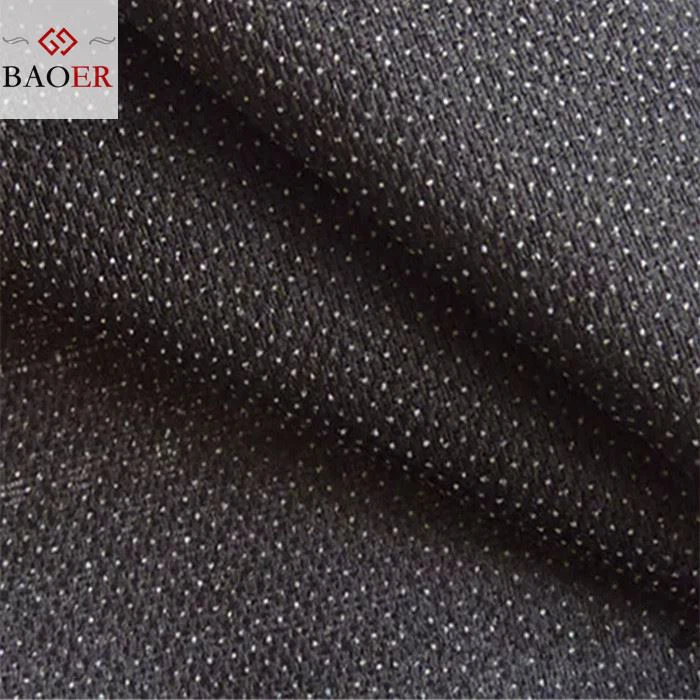
First off, what exactly is interlining? Well, interlining is a layer of fabric that's used between the outer fabric and the lining of a garment. It gives the garment structure, shape, and can also add some extra warmth. There are different types of interlining, like Bonded Blackout Interlining, Polyester Woven Fusible Interlining, and Woven Interlining Fabric. Each type has its own unique features and uses.
Now, let's talk about water - resistance. Water - resistance is the ability of a material to resist the penetration of water to some degree. It's not the same as waterproof, which means water can't penetrate at all. Whether an interlining is water - resistant depends on a few factors.
The material of the interlining plays a huge role. For example, polyester is a common material used in interlining. Polyester has some natural water - repellent properties. It doesn't absorb water easily, so interlinings made from polyester can be somewhat water - resistant. When water hits a polyester interlining, it tends to bead up and roll off rather than soak in. This is great for keeping the garment dry to a certain extent.
However, not all polyesters are created equal. The density and weave of the polyester fabric also matter. A tightly woven polyester interlining will be more water - resistant than a loosely woven one. A tight weave leaves fewer gaps for water to seep through. So, if you're looking for a water - resistant interlining, pay attention to the weave of the polyester.
Another factor is the treatment of the interlining. Some interlinings are treated with special chemicals to enhance their water - resistance. These treatments can create a barrier on the surface of the interlining, making it even more difficult for water to penetrate. For instance, a fluoropolymer treatment can significantly increase the water - repellency of an interlining. But these treatments come at a cost, both in terms of money and the environmental impact.
Now, let's look at some of the drawbacks. Even if an interlining is water - resistant, it has its limits. If it's exposed to a large amount of water for a long time, water will eventually start to seep through. Also, the water - resistance can wear off over time, especially with regular washing and wear. The chemicals used in the treatment can break down, and the fabric's natural water - repellent properties can diminish.
In different applications, the need for water - resistant interlining varies. In outerwear, like jackets and coats, a water - resistant interlining can be a great addition. It helps keep the wearer dry and can also add some insulation. In formal wear, the need for water - resistance might not be as high. But it can still be beneficial in case of unexpected rain or spills.
Let's take a closer look at our Bonded Blackout Interlining. This type of interlining is often used in curtains and some heavy - duty garments. While it's not primarily designed for water - resistance, if it's made from a water - resistant material like polyester and has a tight weave, it can offer some level of water - protection. It can prevent light rain from soaking through and can also be useful in damp environments.
Our Polyester Woven Fusible Interlining is another popular choice. As the name suggests, it's made from polyester and is fusible, which means it can be easily attached to the outer fabric. Polyester's natural water - repellent properties make this interlining a good option for those looking for some water - resistance. It's commonly used in shirts, blouses, and some lightweight jackets.
The Woven Interlining Fabric is a more general term. The water - resistance of this type of interlining depends on the specific material and weave. If it's made from a synthetic material like nylon or polyester, it has a better chance of being water - resistant compared to natural fibers like cotton.
So, is interlining water - resistant? The answer is it can be, but it depends on the material, weave, and treatment. If you're in the market for a water - resistant interlining, here are some tips. First, ask your supplier about the material and its water - repellent properties. Look for interlinings with a tight weave and, if possible, those that have been treated for water - resistance. Also, consider your specific application. If you need high - level water - protection, you might need to invest in a more specialized interlining.
If you're interested in our interlining products and want to discuss your specific needs for water - resistant interlining, we'd love to hear from you. Whether you're a clothing manufacturer, a tailor, or someone looking for high - quality interlining for a personal project, we can provide you with the right solutions. Just reach out to us, and we'll be happy to have a chat about your requirements and how our interlinings can meet them.
References:

- Textile Science textbooks
- Industry reports on interlining materials
