


As a supplier of woven cotton interfacing, I often get questions from customers about the properties of our products, and one of the most common ones is, "Is woven cotton interfacing water-resistant?" Let's dive into this topic and explore the ins and outs of the water resistance of woven cotton interfacing.
Understanding Woven Cotton Interfacing
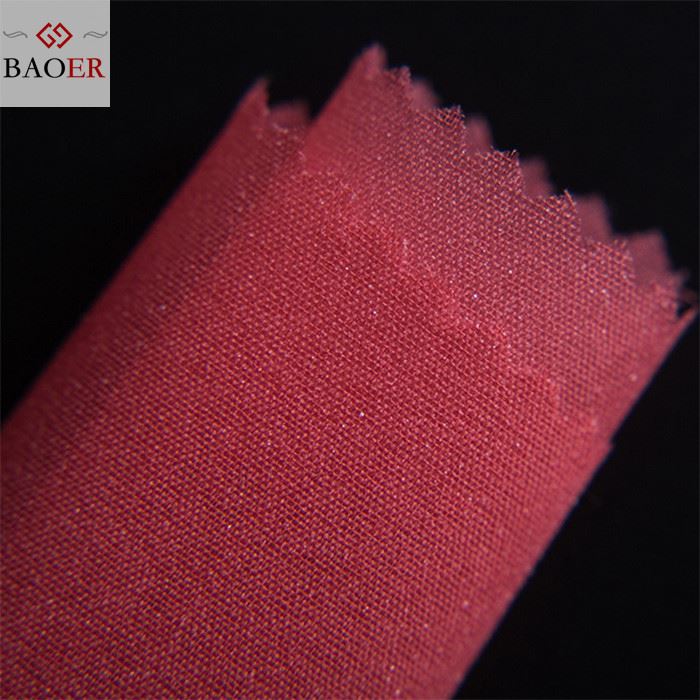
First off, let's quickly go over what woven cotton interfacing is. Woven cotton interfacing is a fabric that's used to add structure, stability, and support to other fabrics. It's made by weaving cotton fibers together, creating a strong and durable material. We use it in all sorts of applications, from clothing to home decor. You can use it to reinforce collars, cuffs, and waistbands in garments, or to add stiffness to tablecloths and curtains.
The Natural Properties of Cotton
Cotton is a natural fiber, and it has some unique properties. One of the things that cotton is known for is its absorbency. Cotton fibers can soak up a lot of water, which is great for things like towels and t-shirts because they can absorb sweat and moisture. But when it comes to water resistance, this absorbency can be a bit of a drawback.
When woven cotton interfacing gets wet, the cotton fibers absorb the water. This can cause the interfacing to become heavy and lose its shape. In some cases, it can even lead to shrinkage or distortion of the interfacing and the fabric it's attached to. So, in its natural state, woven cotton interfacing isn't very water-resistant.
Treatments for Water Resistance
But don't worry! There are ways to make woven cotton interfacing more water-resistant. One common method is to apply a water-repellent treatment to the interfacing. These treatments work by creating a barrier on the surface of the cotton fibers, preventing water from being absorbed.
There are different types of water-repellent treatments available. Some are based on chemicals like fluorocarbons, which are very effective at repelling water. However, these chemicals can be controversial because of their potential environmental and health impacts. Other treatments use natural or eco-friendly materials, such as waxes or silicone-based compounds. These treatments are often less effective than fluorocarbon-based ones, but they're a more sustainable option.
When we apply a water-repellent treatment to our woven cotton interfacing, we make sure to test it thoroughly to ensure that it meets our quality standards. We check things like the water repellency rating, the durability of the treatment, and how it affects the other properties of the interfacing, like its hand feel and stiffness.
Limitations of Water-Resistant Woven Cotton Interfacing
Even with a water-repellent treatment, woven cotton interfacing has its limitations when it comes to water resistance. For example, a water-resistant woven cotton interfacing will still absorb some water if it's immersed in water for a long time or if it's exposed to high-pressure water, like in a heavy downpour.

Also, the water-repellent treatment can wear off over time, especially with repeated washing or exposure to harsh conditions. So, if you need a fabric that's completely waterproof, woven cotton interfacing might not be the best choice. You might want to consider other materials, like polyester or nylon, which can be made more waterproof.
Applications of Woven Cotton Interfacing
Despite its limitations in terms of water resistance, woven cotton interfacing is still a popular choice for many applications. In the fashion industry, it's used in a variety of garments, from formal wear to casual clothing. It's great for adding structure to collars and cuffs, giving them a crisp and professional look. In home decor, it's used to add stiffness to curtains and tablecloths, making them look more elegant.
If you're interested in our woven cotton interfacing products or want to learn more about our water-resistant treatments, check out some of our other options like Woven Adhesive Interlining, Polyester Woven Fusible Interlining, and Woven Fusible Warp Knitted Interfacing.
Contact for Procurement
If you're thinking about using woven cotton interfacing in your next project or you have questions about our water-resistant options, feel free to reach out. We're here to help you find the right product for your needs. Whether you're a small business owner looking for a reliable interfacing supplier or a large manufacturer with specific requirements, we can work with you.
References
- Textile Technology Handbook: A comprehensive guide to textile properties, including cotton and its treatments.
- Journal of Applied Textile Research: Studies on the effectiveness of water-repellent treatments on natural fibers.
- Industry reports on the use of woven cotton interfacing in fashion and home decor.
