


When it comes to the selection of interlining fabric for high - temperature use, as an interlining fabric supplier, I've witnessed firsthand the importance of making the right choice. High - temperature environments can pose significant challenges to interlining materials, and the wrong selection can lead to a range of issues, from poor performance to product failure. In this blog, I'll share some key factors to consider when choosing interlining fabric for high - temperature applications.
1. Thermal Resistance
The most fundamental property of an interlining fabric for high - temperature use is its thermal resistance. This refers to the fabric's ability to withstand high temperatures without significant degradation. Different interlining fabrics have different temperature limits. For example, some synthetic interlinings can tolerate temperatures up to 150°C, while others, made from more heat - resistant materials, can withstand temperatures well over 200°C.
When assessing thermal resistance, it's crucial to understand the exact temperature range your application will be exposed to. If you're working on a project where the interlining will be in contact with a heat - generating component, like in some industrial or automotive applications, you need to choose a fabric with a high enough thermal resistance. For instance, in the automotive industry, interlinings used in engine compartments need to withstand the high temperatures generated by the engine. A fabric with insufficient thermal resistance may melt, shrink, or lose its structural integrity, which can compromise the performance of the entire product.
2. Shrinkage and Dimensional Stability
High temperatures can cause interlining fabrics to shrink. Shrinkage can lead to a change in the shape and size of the final product, which is unacceptable in many applications. Therefore, dimensional stability is a critical factor to consider.
A high - quality interlining fabric for high - temperature use should have minimal shrinkage even when exposed to elevated temperatures for extended periods. Some interlinings are pre - shrunk during the manufacturing process to reduce this risk. When selecting an interlining, look for information on its shrinkage rate at different temperatures. This data can usually be obtained from the fabric supplier. For example, our Woven Interlining Fabric is engineered to have excellent dimensional stability, ensuring that it maintains its shape and size even under high - temperature conditions.
3. Adhesive Properties (if applicable)
Many interlining fabrics use adhesives to bond with other materials. In high - temperature applications, the adhesive must also be able to withstand the heat. A poor - quality adhesive may lose its bonding strength at high temperatures, causing the interlining to separate from the main fabric.
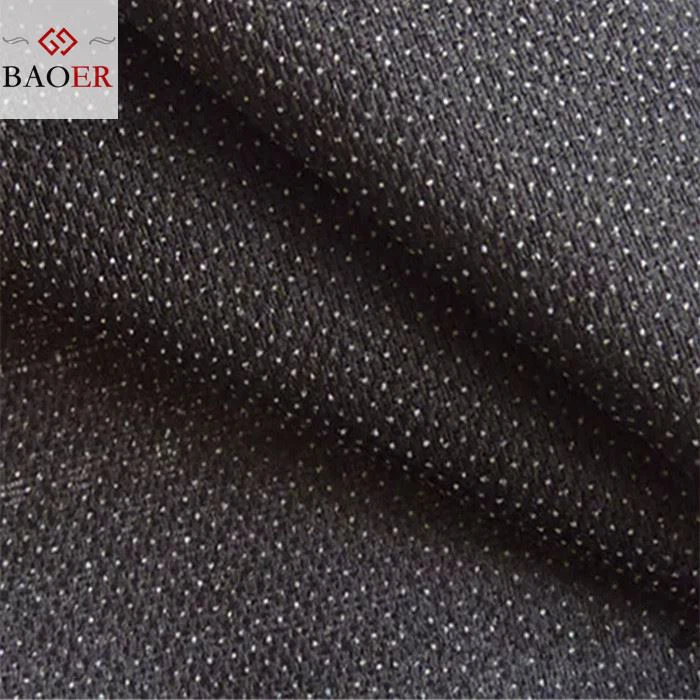
When choosing an interlining with an adhesive, consider the type of adhesive used. Some adhesives are formulated specifically for high - temperature applications. They have a high melting point and can maintain their bonding strength even in hot environments. Our Microdot Fusible Woven Fusing Interlining uses a high - performance adhesive that offers reliable bonding at elevated temperatures, ensuring that the interlining stays firmly attached to the fabric.
4. Chemical Resistance
In high - temperature environments, interlining fabrics may also be exposed to various chemicals. These chemicals can react with the fabric, causing damage or degradation. Therefore, chemical resistance is an important consideration.
For example, in some industrial applications, interlinings may come into contact with solvents, acids, or alkalis. A fabric that is not chemically resistant may break down or lose its physical properties when exposed to these substances. When selecting an interlining, inquire about its chemical resistance. We can provide detailed information on the chemical compatibility of our Woven Fusible Warp Knitted Interfacing to help you make an informed decision.
5. Mechanical Properties
The mechanical properties of the interlining fabric, such as tensile strength and tear resistance, also matter in high - temperature applications. High temperatures can weaken the fabric, reducing its ability to withstand mechanical stress.
A strong interlining is essential, especially in applications where the fabric will be subject to stretching, pulling, or abrasion. For example, in some heavy - duty industrial garments, the interlining needs to maintain its mechanical integrity even when exposed to high temperatures and physical stress. When evaluating an interlining, look for data on its tensile strength and tear resistance at high temperatures.
6. Breathability
In some applications, breathability is an important factor. Even in high - temperature environments, if the interlining fabric is used in clothing or other items that come into contact with the human body, it needs to allow air to pass through.
A non - breathable interlining can cause discomfort, especially in hot and humid conditions. It can also lead to the buildup of moisture, which can further degrade the fabric over time. When choosing an interlining for such applications, look for fabrics with good breathability. Some modern interlining materials are designed to have a porous structure that allows air circulation while still providing the necessary support.
7. Cost - effectiveness
While performance is crucial, cost - effectiveness also plays a role in the selection of interlining fabric. You need to balance the performance requirements of your application with the cost of the interlining.

Sometimes, a more expensive interlining may offer better performance, but it may not be necessary for all applications. On the other hand, choosing a very cheap interlining may result in poor performance and higher long - term costs due to product failures or replacements. As a supplier, we can help you find the right balance by offering a range of interlining fabrics at different price points.
Making the Right Choice
Choosing the right interlining fabric for high - temperature use requires a comprehensive understanding of your application's requirements and the properties of different interlining materials. By considering factors such as thermal resistance, shrinkage, adhesive properties, chemical resistance, mechanical properties, breathability, and cost - effectiveness, you can make an informed decision.
If you're still unsure about which interlining fabric is best for your high - temperature application, don't hesitate to contact us. Our team of experts is always ready to provide you with personalized advice and guidance. We can help you select the most suitable interlining fabric based on your specific needs and budget. Whether you're working on a small - scale project or a large - scale industrial application, we have the expertise and products to meet your requirements. Reach out to us today to start the conversation about your interlining needs.
References
- Textile Research Journal. Various issues on high - temperature textile materials.
- Industrial Fabric Association International publications on interlining fabrics for special applications.
