


As a dress interlining supplier, ensuring the colorfastness of dress interlining is of utmost importance. Colorfastness refers to the ability of a fabric to retain its color when exposed to various conditions such as washing, light, rubbing, and perspiration. In the dress industry, high - quality interlining with excellent colorfastness not only enhances the overall appearance of the dress but also ensures its durability. Here are some key strategies and considerations to ensure the colorfastness of dress interlining.
1. Selection of Dyes and Pigments
The first step in ensuring colorfastness is the proper selection of dyes and pigments. Different types of dyes have different levels of colorfastness properties. For example, reactive dyes are known for their good colorfastness to washing, as they form a chemical bond with the fiber molecules of the interlining fabric. This bond makes it difficult for the dye to be washed out.
When choosing dyes, we also need to consider the type of fiber in the interlining. Natural fibers like cotton and wool may require different dyes compared to synthetic fibers such as polyester and nylon. For instance, acid dyes are commonly used for wool interlining, as they have good affinity for the protein fibers in wool.
In addition to dyes, pigments can also be used in the coloring process. Pigments are insoluble in water and are usually bound to the fabric surface with a binder. Pigmented interlining often has good colorfastness to light and rubbing, but the choice of binder is crucial. A high - quality binder can ensure that the pigments adhere firmly to the fabric, preventing them from being rubbed off.
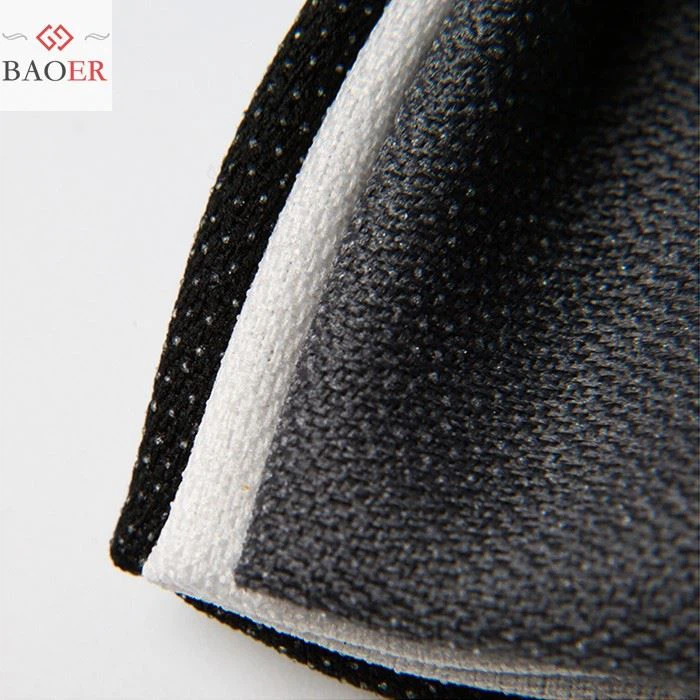

2. Pretreatment of the Interlining Fabric
Before dyeing or printing the interlining, proper pretreatment is essential. This includes processes such as scouring, bleaching, and mercerizing. Scouring removes impurities, oils, and waxes from the fabric surface, which can improve the dye's ability to penetrate the fibers. Bleaching is used to remove natural colors from the fabric, providing a clean base for dyeing. Mercerizing, mainly for cotton interlining, can increase the fiber's affinity for dyes and improve the overall colorfastness.
For example, if the interlining fabric has a lot of oil stains, these stains can act as a barrier to the dye, resulting in uneven color and poor colorfastness. By scouring the fabric thoroughly, we can ensure that the dye can reach all parts of the fiber evenly.
3. Dyeing and Printing Processes
The dyeing and printing processes themselves play a significant role in colorfastness. During the dyeing process, factors such as dye concentration, temperature, pH value, and dyeing time need to be carefully controlled.
If the dye concentration is too high, it may lead to excessive dye deposition on the fabric surface, which can result in poor colorfastness to rubbing. On the other hand, if the concentration is too low, the color may be too pale and may not meet the customer's requirements.
Temperature also affects the dyeing process. Different dyes have different optimal dyeing temperatures. For example, some reactive dyes require high - temperature dyeing to ensure complete reaction with the fibers. However, if the temperature is too high, it may damage the fibers and affect the colorfastness.
The pH value of the dye bath is another critical factor. For some dyes, a specific pH range is required for optimal dyeing. For example, acid dyes work best in an acidic environment, while reactive dyes may require an alkaline environment.
In the case of printing, the printing paste formulation and the printing method are important. A well - formulated printing paste can ensure good adhesion of the dye or pigment to the fabric. Different printing methods, such as screen printing and digital printing, may also have different impacts on colorfastness. Screen printing, for example, may require a thicker layer of printing paste, which can affect the fabric's feel and colorfastness if not properly controlled.
4. Post - treatment of the Dyeed or Printed Interlining
After dyeing or printing, post - treatment is necessary to improve colorfastness. One common post - treatment method is washing. Washing the dyed or printed interlining can remove any loose dyes or pigments that did not bond properly to the fabric. This is usually done in a washing machine with appropriate detergents and at a specific temperature and time.
Another post - treatment method is the application of fixing agents. Fixing agents can react with the dyes or pigments on the fabric to form a more stable complex, enhancing the colorfastness to washing and rubbing. There are different types of fixing agents available, such as cationic fixing agents and anionic fixing agents, and the choice depends on the type of dye used.
5. Testing and Quality Control
Regular testing is crucial to ensure the colorfastness of dress interlining. There are various international standards for colorfastness testing, such as ISO (International Organization for Standardization) and AATCC (American Association of Textile Chemists and Colorists).
Tests for colorfastness to washing, light, rubbing, and perspiration are commonly carried out. For example, in the colorfastness to washing test, the dyed or printed interlining is washed under specific conditions (temperature, detergent type, washing time), and then the change in color and the staining of adjacent fabrics are evaluated.
In our company, we have a well - equipped laboratory where we conduct these tests regularly. We also have a strict quality control system. Only interlining products that meet the required colorfastness standards can be released to the market.
6. Consideration of End - Use Conditions
The end - use conditions of the dress interlining should also be considered when ensuring colorfastness. For example, Wedding Dress Lining Fabric may be exposed to different environmental conditions compared to Waist Band Interlining Fabric. Wedding dresses are often worn for a short period in a relatively clean environment, but they may be stored for a long time. Therefore, good colorfastness to light and storage conditions is important.
On the other hand, waist band interlining may be subject to more rubbing and stretching during daily use. So, high colorfastness to rubbing and mechanical stress is required.
Thinsulate Interlining Fabric is often used in cold - weather clothing. It may be exposed to moisture and sweat, so colorfastness to perspiration and washing is crucial.
In conclusion, ensuring the colorfastness of dress interlining is a complex process that involves multiple steps, from the selection of raw materials to the final product testing. As a dress interlining supplier, we are committed to providing high - quality interlining products with excellent colorfastness. If you are interested in our dress interlining products or have any questions about colorfastness, please feel free to contact us for further discussion and procurement negotiation.
References
- Textile Chemistry and Coloration, Second Edition, edited by Harold P. Freeman.
- Handbook of Textile and Industrial Dyeing, Volume 1: Principles, Processes and Types of Dyes, edited by M. Lewis and R. S. Blackburn.
- ISO standards related to colorfastness testing (e.g., ISO 105 series).
- AATCC Technical Manual and Test Methods.
