


Hey there! As a supplier of non woven interlining, I often get asked about the sound - absorbing property of this amazing material. So, I thought I'd take some time to share what I know with you all.
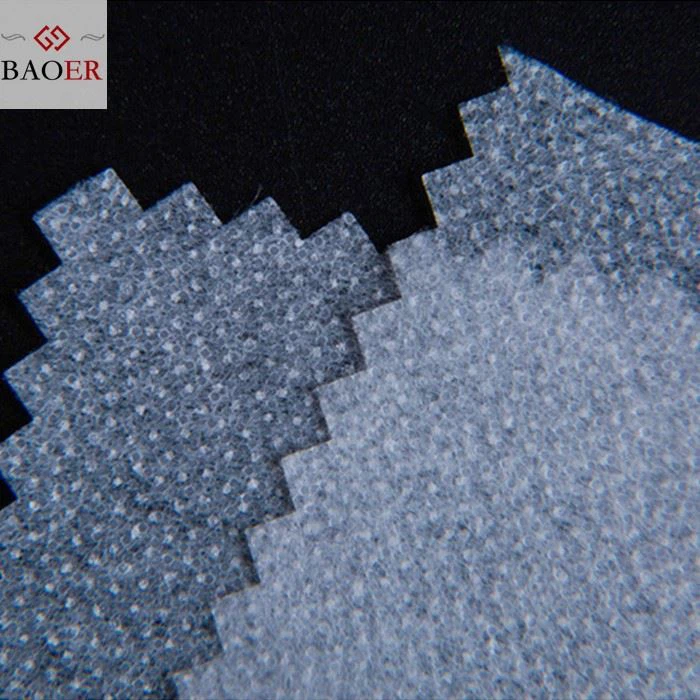
First off, let's understand what non woven interlining is. Non woven interlining is a type of fabric that's made by bonding or felting fibers together, rather than weaving or knitting them. It's used in a wide range of applications, from clothing to automotive interiors and even in some construction projects.
Now, onto the sound - absorbing property. Sound absorption is all about reducing the amount of sound that bounces back from a surface. When sound waves hit a material, they can either be reflected, transmitted through the material, or absorbed. The goal of a sound - absorbing material is to convert the sound energy into heat energy, which effectively reduces the noise level.
Non woven interlining has some pretty cool sound - absorbing characteristics. The structure of non woven fabrics plays a big role here. These fabrics are made up of a network of randomly arranged fibers. When sound waves enter this fibrous network, they get trapped and scattered. The fibers create a lot of small air pockets, and as the sound waves move through these pockets, they rub against the fibers. This friction converts the sound energy into heat, which is how the sound gets absorbed.
The density of the non woven interlining also affects its sound - absorbing ability. Generally, denser non woven interlinings tend to absorb more sound. A higher density means there are more fibers per unit volume, which provides more surface area for the sound waves to interact with. This increased interaction leads to better sound absorption.
Another factor is the thickness of the non woven interlining. Thicker interlinings usually perform better in terms of sound absorption. A thicker layer gives the sound waves more space to travel through the fibrous network, increasing the chances of the sound energy being converted into heat.
Let's talk about some of the specific types of non woven interlining and their sound - absorbing properties.
Non Woven Adhesive Interlining is a popular choice. This type of interlining has an adhesive layer, which not only helps in bonding it to other fabrics but also can contribute to its sound - absorbing capabilities. The adhesive can add an extra layer of density and structure, enhancing the overall sound - absorbing performance.
Thermo Bond Non Woven Interlining is made by using heat to bond the fibers together. The thermo - bonding process creates a stable structure that can effectively trap sound waves. The heat - bonded fibers form a more rigid network compared to some other non woven types, which can be beneficial for sound absorption.
Polyester Spunbond Nonwoven Fabric is another option. Polyester fibers are known for their durability and strength. In terms of sound absorption, the spunbond process creates a fabric with a relatively uniform structure. This uniformity can help in providing consistent sound - absorbing performance across the material.
In the clothing industry, non woven interlining's sound - absorbing property can be quite useful. For example, in high - end suits or coats, a non woven interlining with good sound - absorbing qualities can reduce the rustling noise that sometimes occurs when the fabric moves. This can enhance the overall wearing experience for the customer.
In the automotive industry, non woven interlining is used in car interiors. It can be placed under carpets, door panels, and even in the dashboard area. The sound - absorbing property helps in reducing road noise, engine noise, and other external sounds, making the car cabin a quieter and more comfortable place to be.
In construction, non woven interlining can be used as an acoustic insulation material. It can be installed in walls, ceilings, and floors to reduce the transmission of sound between different rooms or from the outside environment.
If you're looking for a non woven interlining with excellent sound - absorbing properties, there are a few things to keep in mind. First, consider the application. If it's for a clothing item, you might want a thinner and lighter interlining that still provides some sound absorption without adding too much bulk. For automotive or construction applications, you can go for a denser and thicker interlining for better sound - blocking results.
Also, it's important to test the interlining. You can ask for samples from your supplier and conduct some simple sound - absorption tests. There are various methods to do this, such as using a sound level meter in a controlled environment.
As a non woven interlining supplier, I've seen firsthand how important sound - absorbing properties can be in different industries. We work hard to produce interlinings that meet the specific needs of our customers when it comes to sound absorption. Whether you're in the fashion, automotive, or construction business, we have a range of non woven interlinings that can suit your requirements.
If you're interested in learning more about our non woven interlinings or want to discuss your specific needs, feel free to reach out. We're always happy to have a chat and help you find the right solution for your sound - absorbing requirements. Let's start a conversation and see how we can work together to make your projects more successful.

References
- Textile Handbook: A Comprehensive Guide to Textile Science and Technology
- Automotive Interior Materials and Their Applications
- Construction Acoustics: Principles and Practices
